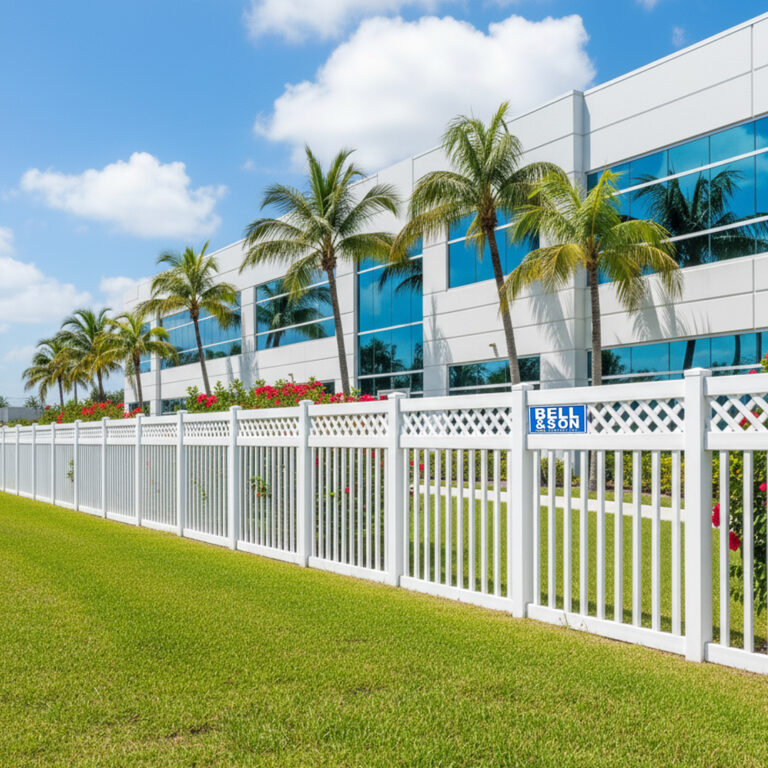
TEMPORARY FENCING: Essential Control and Security for Short-Term Projects
Temporary fencing securing a high-traffic construction zone, prioritizing safety and asset protection.
In construction, event management, or renovation projects, the need for a reliable barrier is immediate but finite. **Temporary fencing** is the rapid, flexible solution for defining boundaries, managing crowds, and—most critically—mitigating **liability and theft**.
Temporary fencing is designed for quick deployment, maximum visibility, and easy relocation. It’s an operational necessity that helps you meet municipal codes and insurance requirements while keeping your site safe and contained.
At **Bell and Son Fence Company, Inc.**, we offer both rental and installation services for temporary fencing, ensuring you get a robust, compliant system exactly when and where you need it.
Modular fence panels used for effective crowd control and pathway definition at a public event.
SYSTEM DEEP DIVE: Types and Deployment
Temporary fencing is categorized primarily by its installation method and required security level:
Chain Link Panels (Modular)
These are pre-fabricated sections of chain link mesh attached to a steel frame. They sit on sandbags or concrete blocks and are connected with clamps.
- Pros: Extremely fast to install/dismantle, excellent for hard surfaces (pavement, concrete), and easily repositioned.
- Cons: Less secure than in-ground post fencing; relies on stability of base and connection points.
Post-Driven Chain Link
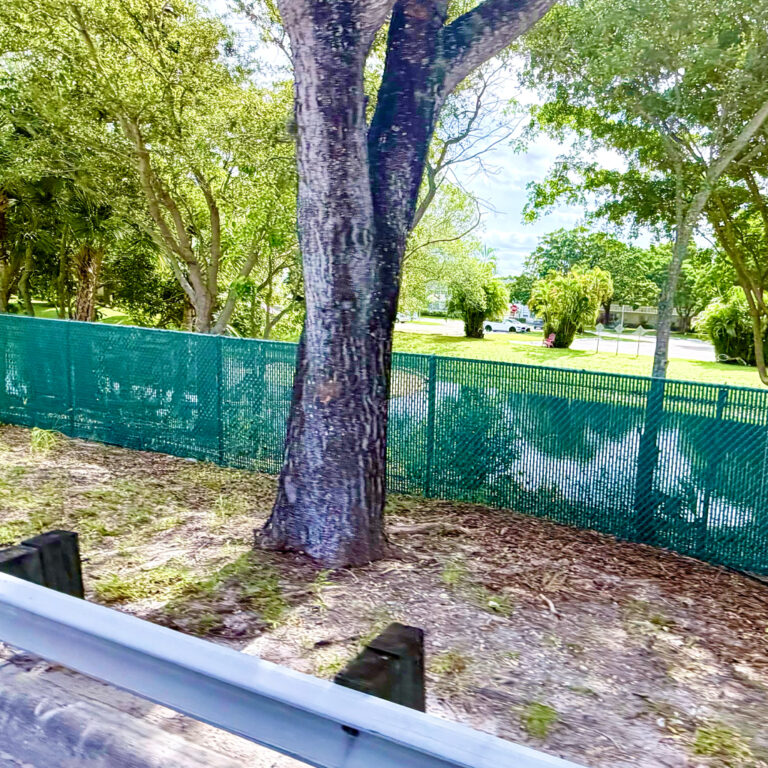
This utilizes standard chain link mesh but is erected using steel posts driven directly into the ground.
- Pros: Provides a much higher level of **security** and **wind resistance**, acting as a true perimeter.
- Cons: Requires ground penetration and is more labor-intensive to install and remove.
Crowd Control Barricades
Low, interlocking steel barriers designed to guide pedestrian traffic and define paths, commonly used at events. They are purely for management, not security.
Materials: Typically constructed of **galvanized steel** (for rust protection) with 9 or 11-gauge chain link mesh for durability.
COMMERCIAL USE: Safety, Liability, and Theft Prevention
Temporary fencing is most often seen in commercial and municipal settings where regulatory compliance is paramount.
Standard Commercial Uses
- Construction Site Perimeter: Establishing the legal boundary of a site to prevent unauthorized access and protect the public from hazards (e.g., using **6-foot high chain link panels** around a new commercial build).
- Excavation Zones: Creating immediate, highly visible barriers around dangerous holes or trenches as required by OSHA and local safety standards.
- Material Storage Yards: Temporarily securing valuable equipment, tools, and construction materials overnight to deter theft.
Custom Commercial Uses
- Screening & Dust Control: Attaching high-density mesh or vinyl screening to temporary chain link to block dust, reduce visibility, and improve site aesthetics.
- Integrated Access Points: Incorporating heavy-duty swing gates and vehicle access points within the temporary perimeter, complete with lockable latches.
EVENT & RESIDENTIAL USE: Organization and Safety
Beyond construction, temporary barriers are essential for managing public flow and protecting residential spaces.
Event Management
- Crowd Funneling: Directing queues for ticketing, entry points, or food vendors using low barricades.
- Restricted Areas: Securing back-of-house areas, vendor parking, or stages from public access.
Residential Use
- Pool and Spa Installation: Meeting code requirements for a temporary safety barrier while a permanent fence or enclosure is being constructed.
- Landscape/Renovation Protection: Protecting sensitive yard areas, gardens, or newly laid sod from foot traffic during home renovation projects.
SMART DECISION: Determining the Right Temporary System
Use these comparison points to determine which temporary system meets your needs:
Factor 1: Surface Type
- Choose Panels If… The fence must stand on pavement, concrete, or frozen ground where driving posts is impossible.
- Choose Post-Driven If… The area is soil or grass, and you need maximum wind resistance and stability.
Factor 2: Security & Duration
- Choose Panels If… The project is short-term (under 30 days) and involves frequent changes to the perimeter.
- Choose Post-Driven If… You need perimeter security for 3+ months, and intrusion/theft is a significant risk.
Factor 3: Aesthetics & Screening
- Choose Screening If… The site is visible to the public or neighbors, and you need to contain dust or obscure the view of the work.
- Avoid Screening If… The primary concern is extreme wind load, as screening can act as a sail, increasing the risk of the fence blowing over.
Factor 4: Cost Model
- Choose Rental If… You need the fence for less than one year. The cost of labor, installation, and removal is included in the rental price.
- Choose Purchase If… Your company manages multiple long-term sites or plans to use the panels frequently over many years.
By opting for a high-quality, professionally installed temporary system, you protect your assets and maintain a safe, compliant work environment from day one.
Need Temporary Fencing for Your Site?
Initiate your estimate below, and let **Bell and Son Fence Company, Inc.** apply our 48+ years of contracting experience to your project.
CALL BELL (+1 954 650 3079)